


May is Sun Awareness Month, and if there is one thing worth talking about this time of year, it is sunscreen.
Not a new serum. Not the latest ingredient trend. Sunscreen.
Because while skincare can feel complicated, with ingredients lists, layering orders, and endless product choices, SPF is the one step that almost every skin professional agrees on, regardless of skin type, age, or concern.
If you are only going to do one thing for your skin every single day, this is it.
What Sun Damage Actually Does to Your Skin
There are two types of UV rays to know about: UVA and UVB.
UVB rays are the ones responsible for sunburn. UVA rays go deeper into the skin and are the main driver of what dermatologists call photoageing, the kind of skin changes that happen gradually over time from repeated sun exposure.
A lot of what people put down to ageing, things like fine lines, uneven skin tone, dark spots, and a loss of firmness, is actually photoageing. It is not just time doing that. It is cumulative sun exposure, often over years, that could have been significantly reduced with consistent sun protection.
And because UVA rays are present all year round, even on cloudy days and even through glass, daily SPF is not just a summer habit. It is a year-round one.
Why SPF Is the Most Agreed-Upon Step in Skincare
Skincare is full of differing opinions. Dermatologists debate ingredients, aestheticians have different approaches, and what works brilliantly for one person can do very little for another.
SPF is different.
It is one of the very few areas where the evidence is clear, consistent, and widely agreed upon across the skin health community. Daily broad-spectrum sun protection reduces the risk of skin cancer, slows the visible signs of ageing, and helps protect everything else you are putting into your skincare routine.
Think of it this way. If you are investing time, money, and effort into your skincare, SPF is what protects that investment.
The Signs of Sun Damage That Are Easy to Miss
Sun damage does not always show up as a burn. In fact, the most significant effects often build quietly over time and can take years to become visible.
Some of the most common signs include:
-
Uneven skin tone and patches of pigmentation
-
Fine lines and a loss of skin elasticity
-
A dull or rough skin texture
-
Redness or visible broken capillaries
If any of those sound familiar, daily SPF from here on is one of the most effective steps you can take to stop further damage from building up.
If You Use Tretinoin or Retinol, SPF Is Non-Negotiable
This one is important, and it is something Dr. Jude is very clear about with her patients.
Tretinoin and retinol work by speeding up cell turnover, removing the upper layer of dead skin cells and bringing fresher, newer skin to the surface. That is what makes them so effective for concerns like fine lines, pigmentation, and skin texture.
But that newer skin is thinner, more delicate, and significantly more vulnerable to UV damage. Without SPF, that sensitivity can lead to redness, irritation, and in some cases, the kind of pigmentation you were using retinol to treat in the first place.
So if tretinoin or retinol is part of your routine, SPF is not optional. It is the step that makes everything else work properly.
How Much SPF Do You Actually Need
A few things worth knowing:
SPF 30 blocks around 97% of UVB rays.
SPF 50 blocks around 98%.
The difference is small but for daily use on the face, SPF 50 is generally recommended, particularly if you are using active ingredients like retinol or acids.
One application in the morning is not enough if you are spending time outdoors. Reapplying every two hours in the sun gives your skin proper protection throughout the day.
And no, the SPF in your foundation or tinted moisturiser alone is not sufficient. It is a helpful top-up, but it should not be your only source of protection.
Making SPF Part of Your Daily Routine
The most common reason people skip sunscreen is that they have not found one that works for them yet. Greasy textures, white casts, pilling under makeup, these are real complaints and they are worth taking seriously.
The good news is that modern SPF formulations have come a long way. A well-formulated SPF 50 should sit comfortably under makeup, absorb without feeling heavy, and work as the final step in your morning routine before you head out.
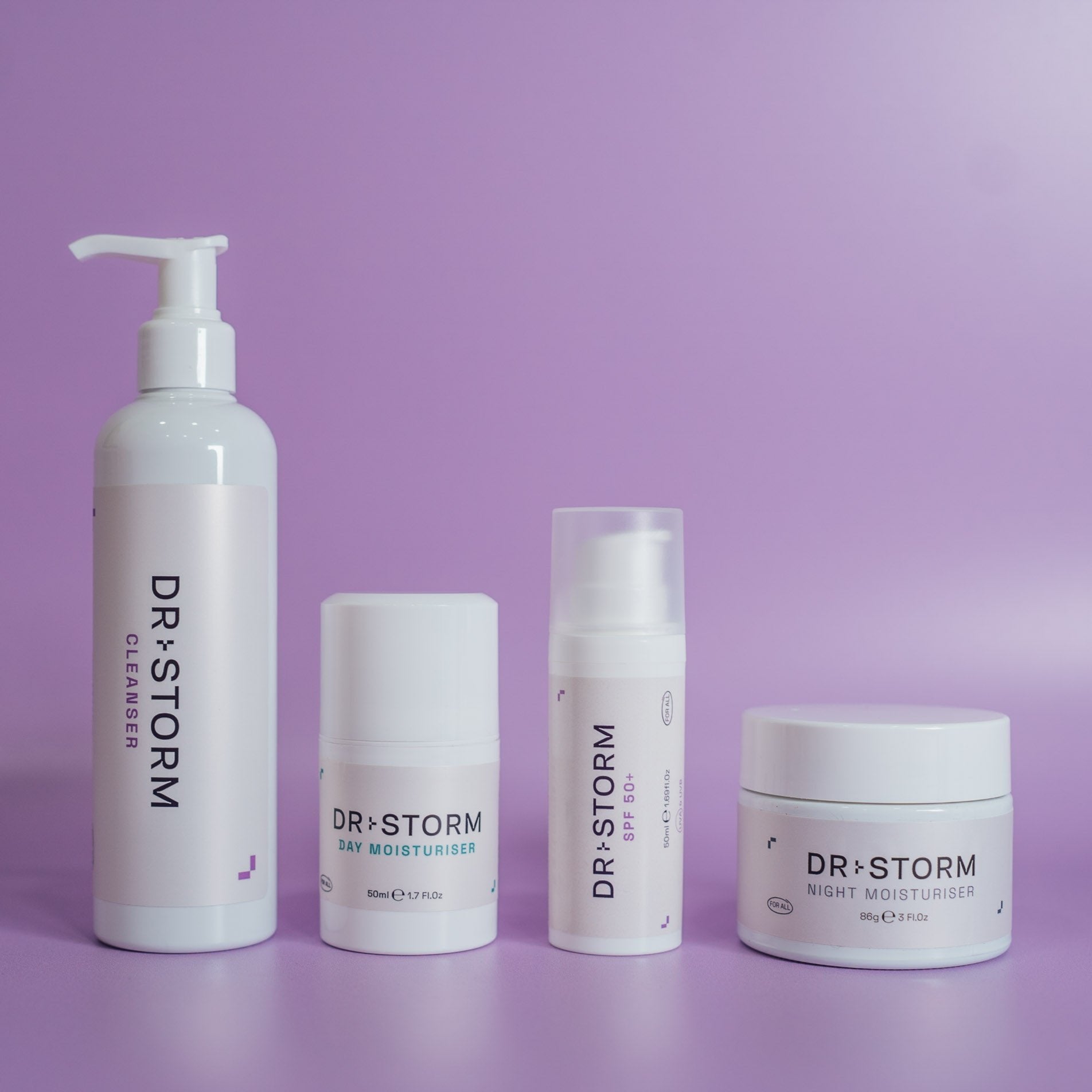
If sunscreen has felt like a chore in the past, it might simply be a case of finding the right one for your skin. Our Basically Brilliant SPF 50 is broad-spectrum, lightweight, fragrance-free, and leaves zero white cast, so it works for everyday wear without the fuss.
A Note From Us This Sun Awareness Month
May is Sun Awareness Month, and it feels like the right moment to mention something that does not come up enough in skincare conversations.
Skin cancer is the most common type of cancer in the UK, and so much of it is preventable. Daily SPF is one of the most effective things you can do to reduce your risk, and skin cancer caught early is highly treatable.
Get into the habit of checking your skin once a month. The ABCD guide makes it simple:
-
A Asymmetry — the two halves of a mole differ in shape
-
B Border — edges are irregular or blurred
-
C Colour — uneven shades of black, brown, or pink
-
D Diameter — any mole getting bigger over weeks or months
If something does not look right or does not go away within a couple of weeks, see your GP. You can be referred to a dermatologist on the NHS.
Your future skin will thank you for it.